RYAN LEE Gallery is pleased to present Niu Systems, a group exhibition of contemporary artists from Hawai‘i, including Kaili Chun, Sean Connelly, Pier Fichefeux, Kainoa Gruspe, Amber Khan, John Koga, Roland Longstreet, Nicole Parente-Lopez, Nanea Lum, Dane Nakama, Enoka Phillips, Nalani Sato, and Lawrence Seward.
Inquire


Inquire

Niu Systems
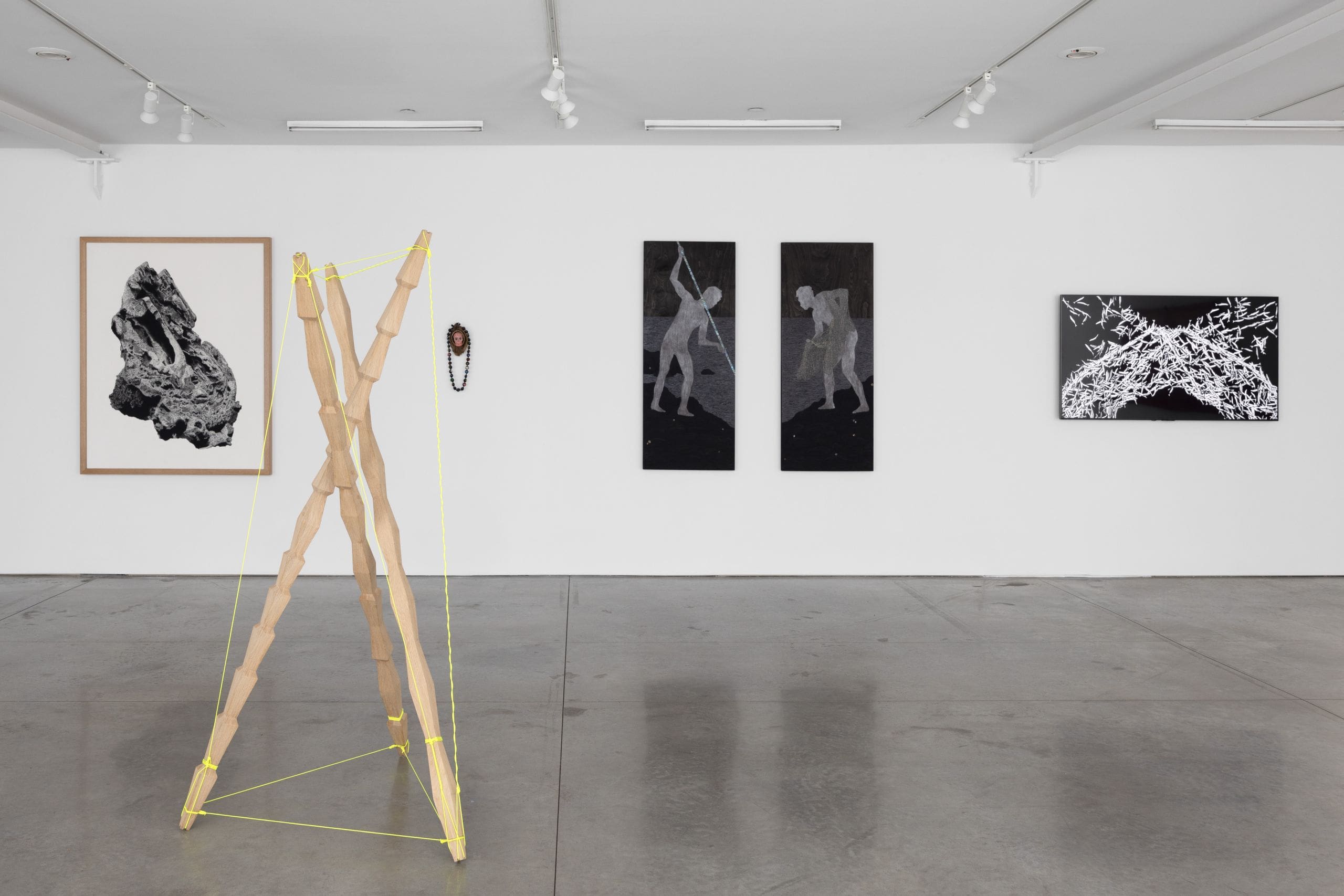
Helix
2025
Walnut wood, cord
80 x 14 x 11 inches (203.2 x 35.6 x 27.9 cm)
Niu is not a coconut. This distinction is not merely linguistic. Where “coconut” names an object for consumption, niu holds layers of ‘ike (knowledge): husk, shell, water, flesh, each revealing itself only through time, care, and engagement. Niu is a relation, not a resource. It carries genealogy, voyaging histories, ancestral planting practices, and future sustenance. Every part has purpose; nothing is isolated; nothing is wasted. To encounter niu is to slow down, to work with one’s hands, to engage in process rather than extraction. It becomes kumu, a teacher, reminding us that knowledge is not taken but revealed through relationships.
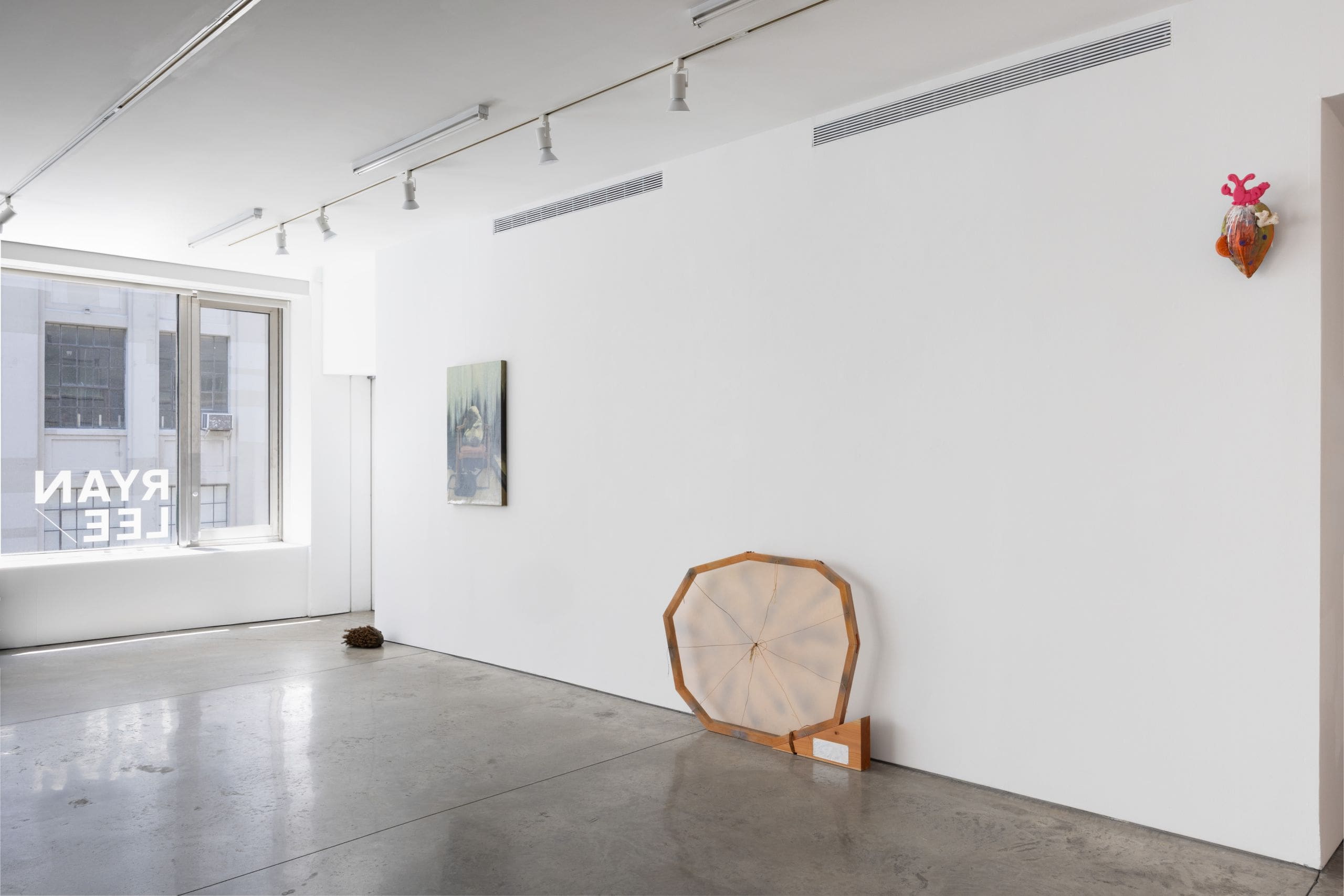
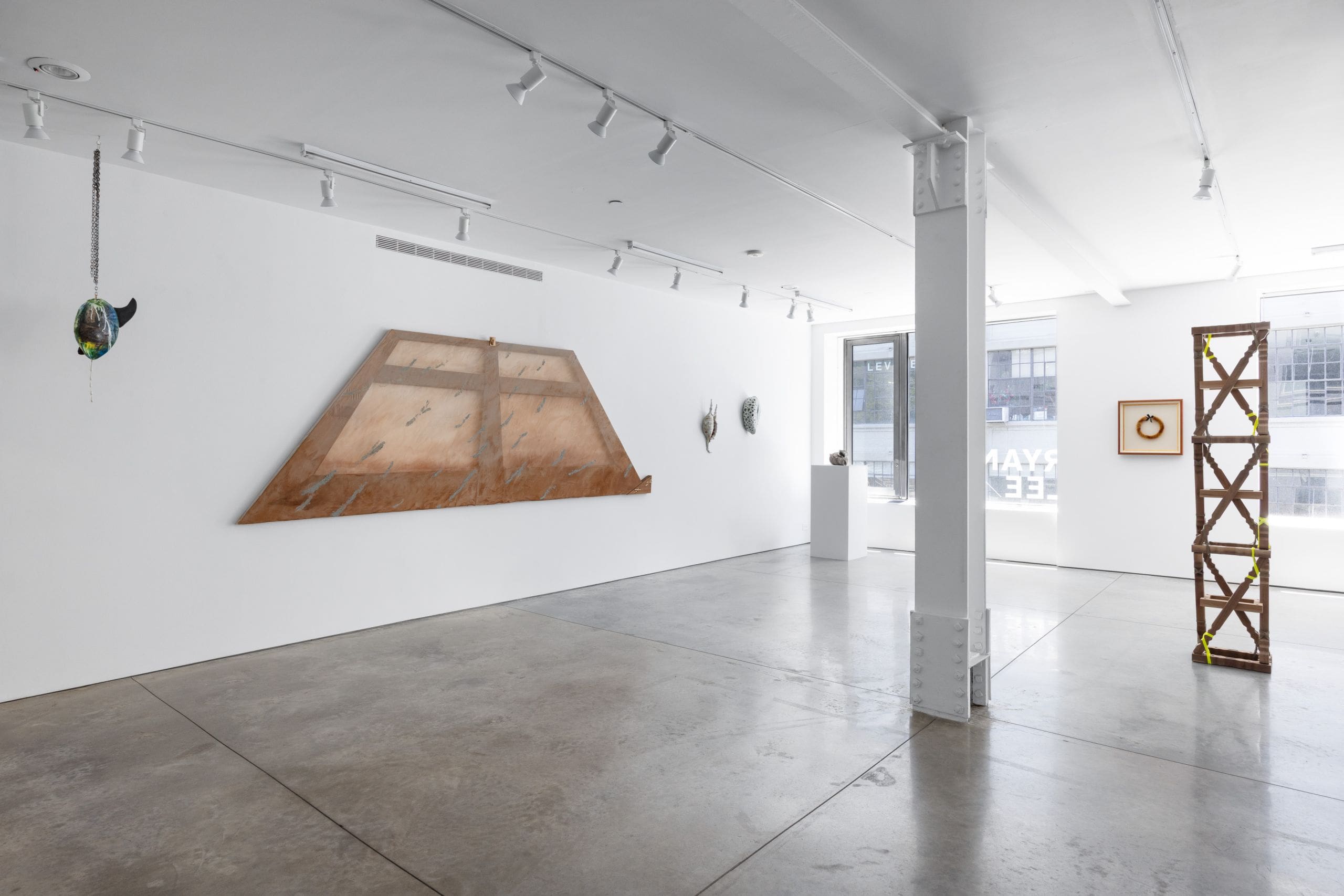
Niu Systems takes this framework as its ground. The exhibition does not treat niu as metaphor or decoration, but as a model for how the works here coexist: as distributed, interdependent parts of a larger structure, each distinct, each inseparable from the whole. On islands, time does not move forward. It gathers. Histories accumulate, materials circulate, and relationships to land deepen. In Hawai‘i, ancestral knowledge, migration, and contemporary movement overlap within a compressed geography. Land is not distant. It is encountered through use, through memory, and through the conditions of daily life.
Inquire
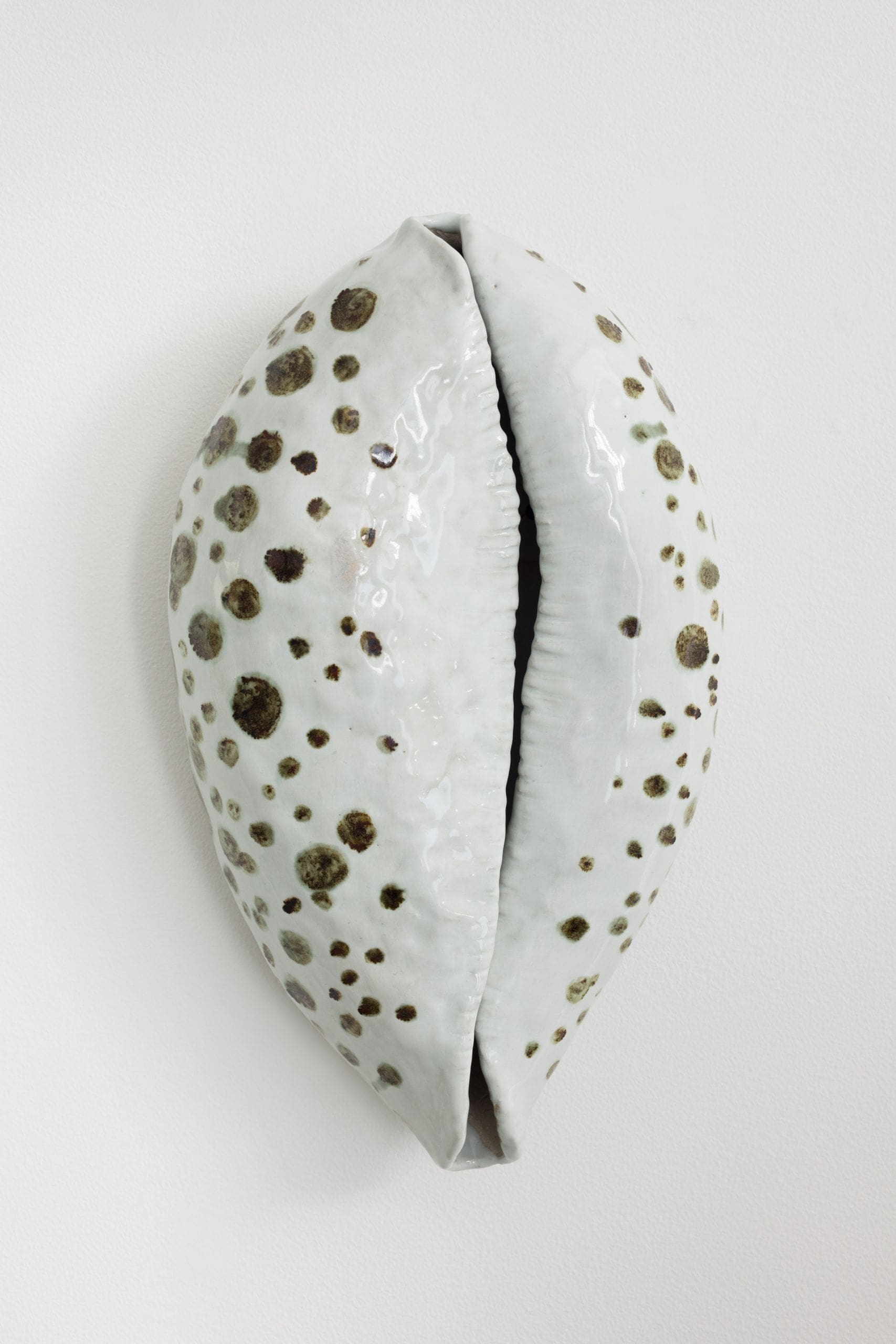
Dane Nakama
calls from home (big cowrie)
2026
High-fire ceramic and audio equipment
18 x 10 x 6 inches (45.7 x 25.4 x 15.2 cm
Inquire

Dane Nakama
calls from home (spider conch)
2026
High-fire porcelain and audio equipment
24 x 10 x 5 inches (61 x 25.4 x 12.7 cm)
Inquire

Amber Khan
For Kala, Manini, and Mākāhā
2025
Hau wood, niu stem, 'opihi, hā'uke'uke, kamani wood, strawberry guava wood, waxed thread
48 x 38 x 32 inches (121.9 x 96.5 x 81.3 cm)
Amber Khan employs niu cordage alongside wood and metal, binding organic and constructed elements where every binding carries both physical and cultural tension. Sean Connelly’s structures rely on lashing and compression, holding form through balance rather than fixed joinery, a logic the niu itself enacts. Kainoa Gruspe maps surface and accumulation, where fragments of environment, sand, line, debris, become quiet records of movement and contact. In Dane Nakama’s panels, shells, pumice, and sand are embedded directly into the work, collapsing image and shoreline into the same plane.
Inquire

Kainoa Gruspe
the door it all came through
2026
Redwood from a plantation-era home in Mānoa, CNC carved ash, teak, strawberry guava, liquid nails adhesive, fabric, dirt from my grandpa's house
144 x 54 x 3 inches (365.8 x 137.2 x 7.6 cm)
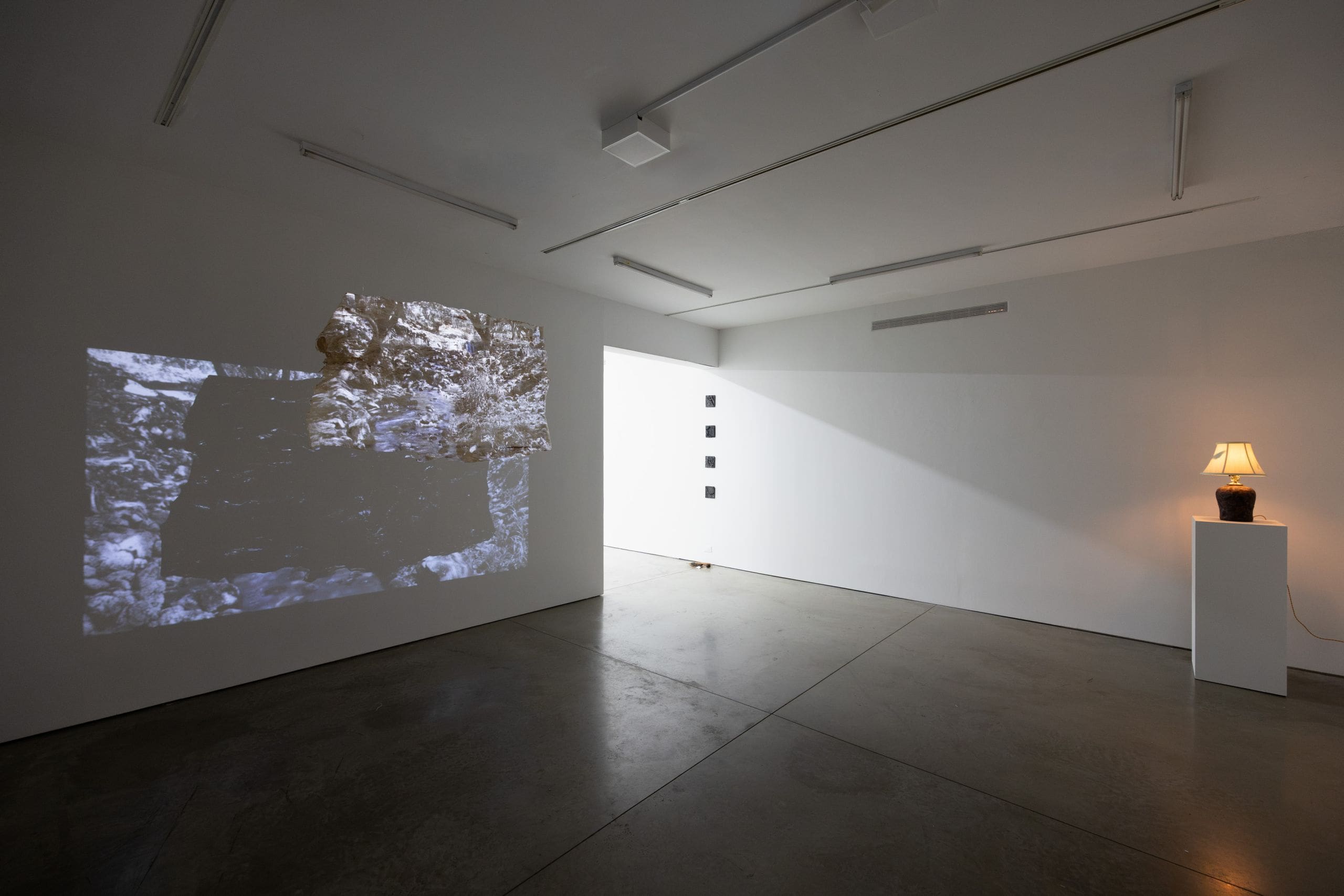
Nanea Lum’s use of kapa and video extends material into duration, making process and time visible within the work. John Koga and Enoka Phillips both engage the inherited weight of objects, how things carry histories that exceed their surfaces. Nalani Sato positions pōhaku within domestic interiors, shifting land into spaces of habitation and memory. Nicole Parente-Lopez isolates the form of a single stone, rendering it as both object and field. Roland Longstreet and Pier Fichefeux approach Hawai‘i from positions shaped by movement and distance, engaging the islands as sites of encounter, observation, and projection, perspectives that do not resolve into a singular view but exist in active relation to the others.
Inquire
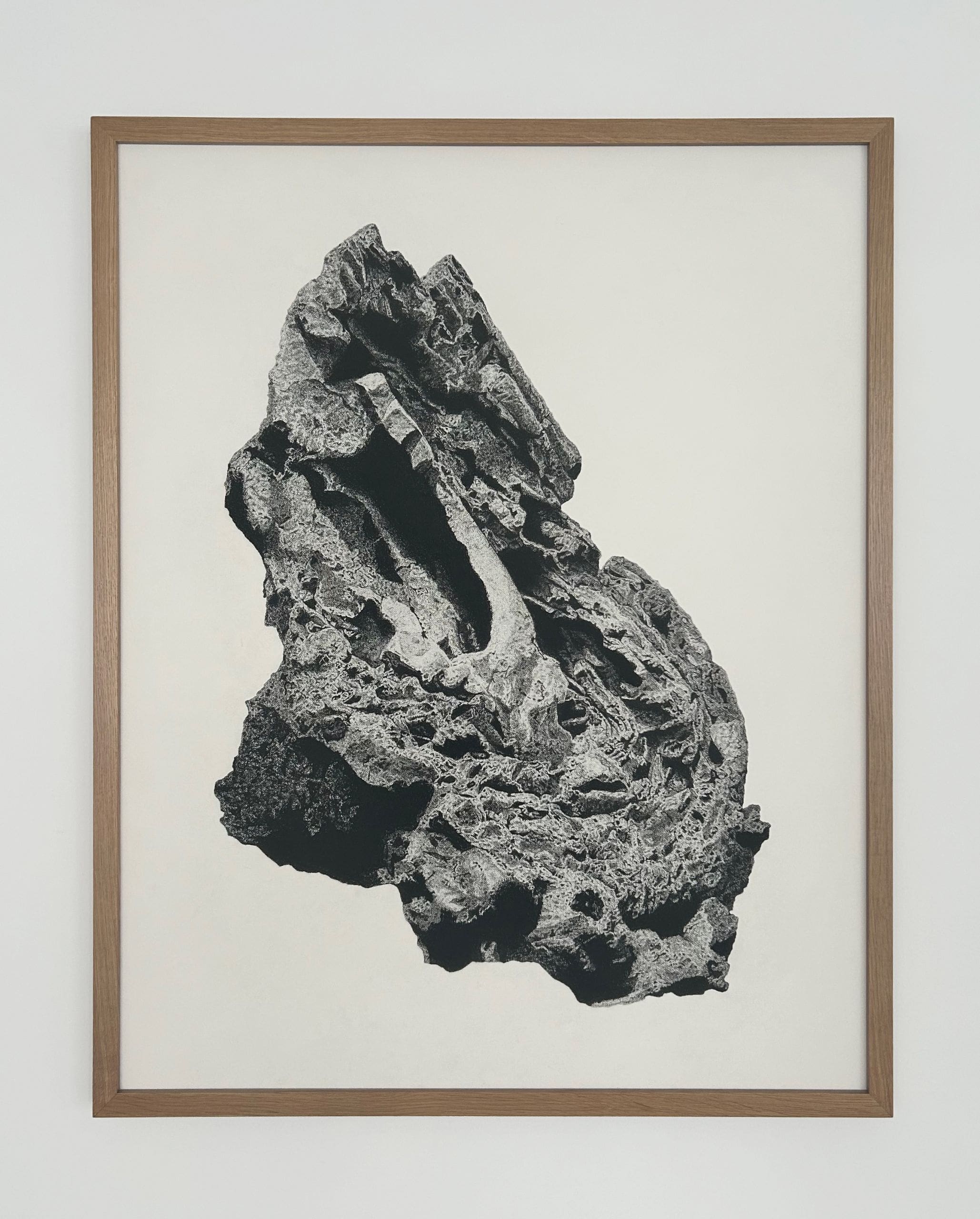
Nicole Parente-Lopez
Standing, Still,
2026
Charcoal
64 x 52 inches (162.6 x 132.1 cm)
Inquire
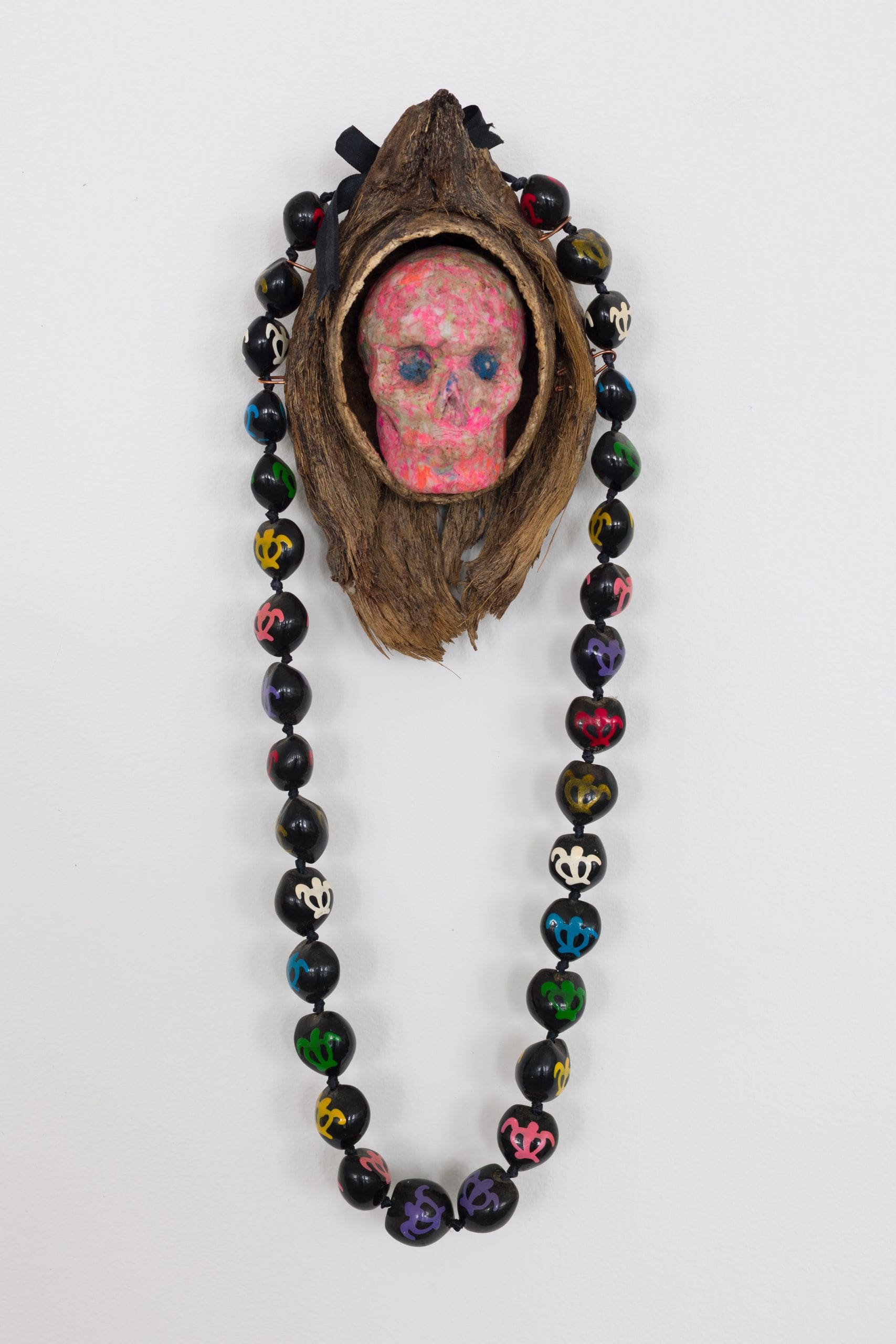
Lawrence Seward
Old Wax Skull with Kukui
2026
Coconut, surfboard wax, kukui nut lei, copper
18 x 6 1/2 x 4 inches (45.7 x 16.5 x 10.2 cm)
Lawrence Seward’s contribution brings the niu into direct sculptural presence. His works are not literal coconuts but representations: painted, assembled forms that invoke the niu’s physical layers while opening onto something stranger and more interior. Organic materials, found objects, and bold surface treatments accumulate on forms that read simultaneously as vessel, organism, and world. Where other works in the exhibition engage niu as structural logic, Seward’s pieces make its body visible – the husk, the opening, the held interior – as sites of mystery and meaning rather than utility.
The conceptual grounding for the exhibition draws in part from the thinking of Kaili Chun, whose work is also included here. Chun’s articulation of niu as a relational framework, one that holds layers of ‘ike rather than a single extractable use, shapes how the exhibition understands its own materials and positions. Her contribution to the show reflects this same integration of concept and form.
Together, the works in Niu Systems do not argue for a single relationship to land, material, or time. Some are grounded in genealogy. Others arrive through migration or temporary presence. What the exhibition holds is not a unified narrative but something closer to what the niu itself demonstrates: a system where each part participates in the whole, where use is inseparable from responsibility, and where meaning is not extracted but revealed slowly, through attention, care, and relationship.
Niu Systems is curated by Jon Santos within Ontopo, a platform spanning performance, installation, and exhibition formats across sites and disciplines. This presentation continues Ontopo’s exhibition track centering Hawai‘i-based artists.
Inquire

John Koga
Passing Cloud II
2026
Oil on canvas
72 x 48 inches (182.9 x 121.9 cm)
Inquire
Inquire

Sean Connelly
Helix
2025
Walnut wood, cord
80 x 14 x 11 inches (203.2 x 35.6 x 27.9 cm)
Inquire
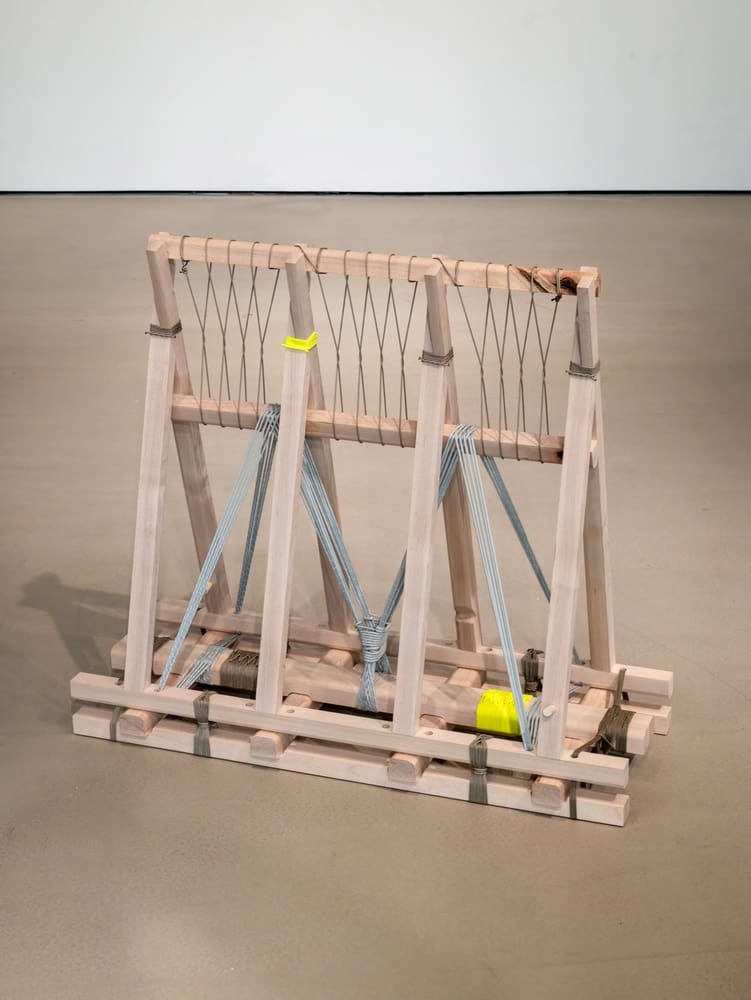
Sean Connelly
Hybrid
2025
Maple wood, cord
30 x 60 x 10 inches (76.2 x 152.4 x 25.4 cm)
Kaili Chun (b. 1962) is a sculptor and installation artist based in Hawai‘i. Her works address ideas of containment and exposure, agency and restraint. Process and materials transform physical spaces into unique environments commenting on contemporary issues in her work.
Sean Connelly (b. 1984) is an artist and spatial practitioner working across contemporary art, spatial practice, and civic engagement. His practice integrates sculpture, moving image, cartography, and site-based intervention to examine relationships between land, water, architecture, and power. Connelly is part of the kekahi wahi collective (led by artists and filmmakers Sancia Miala Shiba Nash and Drew K Broderick), whose work is included in the 2026 Whitney Biennial. Connelly’s work was included in the 2024 Cooper Hewitt Design Triennial.
Inquire

Pier Fichefeux
Untitled 1 (Bengara)
2026
Waxed pigmented concrete
31 x 23 x 1 1/2 inches (78.7 x 58.4 x 3.8 cm)
Inquire

Pier Fichefeux
EELMS nº7
2025
Tar paper photogram exposed on Mauna Loa
98 x 39 inches (248.9 x 99.1 cm)
John Koga (b. 1964) is a Honolulu-based sculptor and painter whose work ranges from small paintings to large sculptures and environmental installations. He’s known for his abstract modernist aesthetic that conveys a sense of serenity, balance, and space inspired by the artists Isamu Noguchi, Satoru Abe, and Tadashi Sato.
Pier Fichefeux (b. 1976) is a French-American artist based on the Big Island of Hawai‘i. His practice works at the boundary between geological and human time, using the forces of volcanic landscape — heat, weight, oxidation, duration — as collaborators in the making of sculpture and works on paper. The land is not a subject. It is a condition of the work.
Inquire

Kainoa Gruspe
#71.106.134
2026
Asphalt from Pāʻauʻau / Pearl City Peninsula Military Housing, niu (coconut fibers) from Puʻuloa / Joint Base Pearl Harbor-Hickam, ironwood from Kanukuaula / Ala Wai Golf Course, steel
11 x 4 x 3 inches (27.9 x 10.2 x 7.6 cm)
Inquire

Kainoa Gruspe
#106.129
2026
Concrete aggregate from Aliamanu / Navy Exchange, niu (coconut fibers) from Puʻuloa / Joint Base Pearl Harbor-Hickam, hau fiber, construction string
6 x 6 x 6 inches (15.2 x 15.2 x 15.2 cm)
Inquire

Kainoa Gruspe
lure for a pufferfish, 2025
Fabric, wood stretcher, douglas fir, colored pencil on paper, plexiglass, nails, dyed hau cordage, niu cordage, paint
40 x 48 inches (101.6 x 121.9 cm)
Kainoa Gruspe (b. 1995) is a painter and sculptor based in Honolulu whose layered works investigate value, duration, and absurdity within contemporary painting. Gruspe engages in a critical and often humorous conversation with art history, pitting surface against symbol, innocence against labor. Gruspe’s work was included in the 2026 Whitney Biennial.
Amber Khan (b. 1993) is an artist from Honolulu, Hawai‘i. Her practice explores philosophies and materials around forms of life and living, spatiotemporal identities, nonlinear realities, cultural production, and the natural world. Khan is primarily a sculptor with a mixed-media approach.
Inquire

Roland Longstreet
Study of Presence II, 2023
Oil and latex paint on wood panel
Image Dimensions: 13 1/2 x 11 inches (34.3 x 27.9 cm)
Framed Dimensions: 15 1/8 x 12 5/8 inches (38.4 x 32.1 cm)
Inquire

Nicole Parente-Lopez
Standing, Still series
2026
Cast cotton paper and charcoal
6 x 6 inches (15.2 x 15.2 cm)
Inquire

Roland Longstreet
Golfer
2022
Latex paint, charcoal on canvas
48 x 68 inches (121.9 x 172.7 cm)
Roland Longstreet (b. 1990) is a painter and sculptor based in Honolulu, Hawai‘i. His work is focused on philosophy and esoteric thought, exploring the medium in search of connectivity and overlap with universal and basic truths.
Nicole Parente-Lopez (b. 1974) is a visual artist based in Honolulu whose charcoal drawings isolate individual stones and natural materials as meditative studies in transformation. Working primarily from volcanic forms, her practice emphasizes attention, reverence, and perceptual intimacy.
Inquire

Nanea Lum
Nu’uanu Streaming II
2026
Video installation and Kapa
Kapa dimensions: 33 x 58 inches (83.8 x 147.3 cm)
RT 00:03:54
Inquire

Dane Nakama
Night Fishing at Puʻuloa
2026
Sumi ink, graphite, sand, mother of pearl, opihi shells, pumice, gloss medium, and crackle medium on wood panel
60 x 48 inches (152.4 x 121.9 cm) overall
60 x 24 inches (152.4 x 61 cm) each
Inquire

Dane Nakama
moʻo and pulelehua
2026
Ceramic, mother of pearl, lampshade
20 x 12 x 12 inches (50.8 x 30.5 x 30.5 cm)
Nanea Lum (b. 1991) is a Native Hawaiian artist born in Kahalu‘u, O‘ahu, Hawai‘i, and based in Honolulu. Her art practice interrelates kapa (Hawaiian barkcloth) making with large-scale paintings, printmaking, drawing, and time-based media. Lum connects different traditions, materials, and perspectives through her interdisciplinary practice.
Dane Nakama (b. 1999) is a Japanese-Uchinanchu ceramicist, painter, and educator whose work bridges local aesthetics, folklore, and decolonial critique. Raised on O‘ahu and currently based on Tongva land, Nakama’s interdisciplinary practice is both highly referential and disarmingly tender.
Enoka Phillips (b. 2001) is a Native Hawaiian feather artist from Maui whose work bridges tradition and modernity through the discipline of hulu (featherwork). Rooted in centuries-old Hawaiian customs, his lei hulu honor the cultural, spiritual, and political significance of feathers.
Inquire
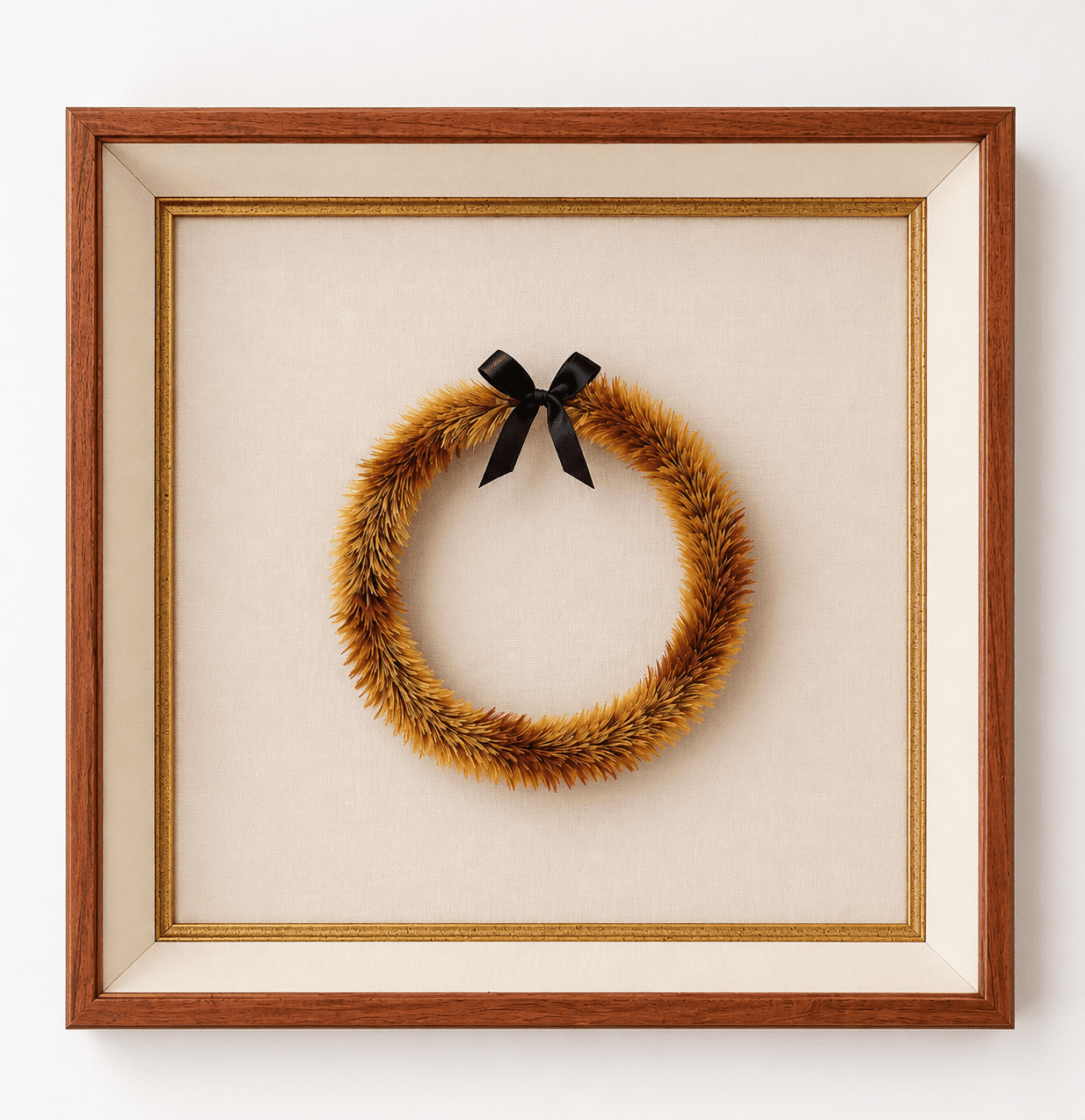
Enoka Phillips
Makani ʻUla (Red Wind)
2026
Chinese golden pheasant feathers, silk satin ribbon, hair from the artist
Lei Dimensions: 10 x 9 inches (25.4 x 22.9 cm)
Framed Dimensions: 21 1/2 x 21 1/2 inches (54.6 x 54.6 cm)
Inquire

Nālani Sato
Two Pōhaku (rocks) and a 1969 Cadillac
2025
Oil on canvas
60 x 48 inches (152.4 x 121.9 cm)
Inquire

Nālani Sato
Pōhaku Sitting on Curbside-Salvaged Midcentury Armchair
2024
Oil on canvas
36 x 24 inches (91.4 x 61 cm)
Nalani Sato (b. 1977) is an oil painter based in Honolulu whose work explores animism, eroticism, ritual, and postcolonial symbolism through complex, narrative compositions. Trained in classical painting, Sato’s figurative work is deeply shaped by personal mythology, spiritual inquiry, and her lived experience in an Americanized, Christian household in occupied Hawai‘i.
Inquire

Lawrence Seward
Negative Brutalist (for Satoru)
2024-25
Coconut, copper, paint, plastic
16 x 8 x 10 inches (40.6 x 20.3 x 25.4 cm)
Inquire

Lawrence Seward
The Fin
2024-25
Coconut, paint, plastic, metal, glass
22 x 10 x 7 inches (38.1 x 20.3 x 12.7 cm)
Lawrence Seward (b. 1966), born and raised in Hawai‘i, has been making and showing art professionally since 1990. Casual yet calculated, his understated work—whether it takes the form of drawings, paintings, publications, sculptures, videos, or installations—frequently deploys tropical kitsch aesthetics to interrogate notions of “paradise.”
Inquire

Dane Nakama
calls from home (striped)
2026
High-fire ceramic
19 x 9 x 5 inches (48.3 x 22.9 x 12.7 cm)
Inquire

Lawrence Seward
Dancing Shrimp
2024-25
Coconut, plastic, paint, coral
14 x 7 1/4 x 6 inches (35.6 x 18.4 x 15.2 cm)
Inquire
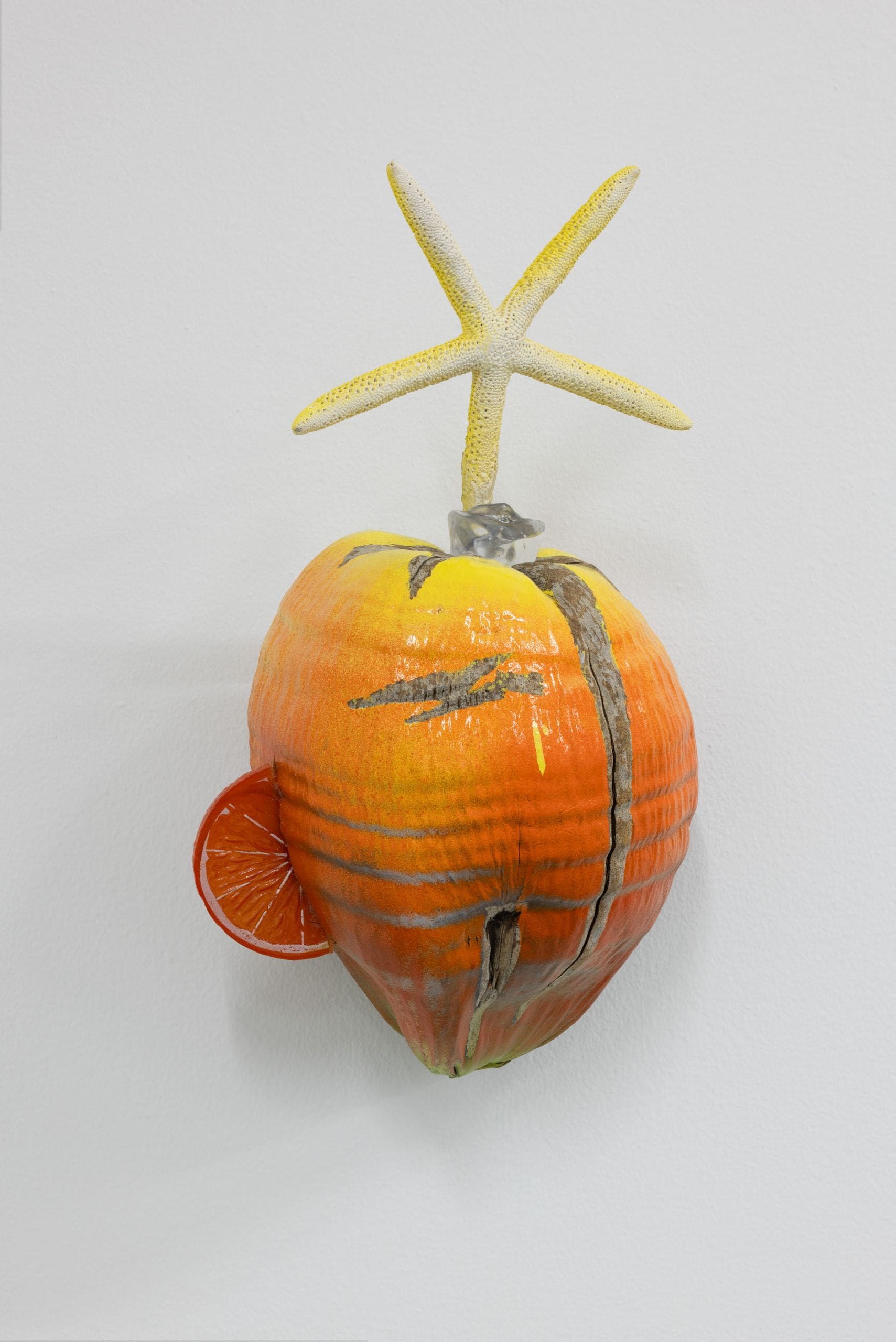
Lawrence Seward
South Star Sunset
2025
Coconut, paint, dried starfish
15 x 8 x 5 inches (38.1 x 20.3 x 12.7 cm)


