


BIOGRAPHY
Tiffany Chung (b. 1969 Da Nang, Vietnam) is globally noted for her interdisciplinary practice cultivated through rigorous analysis of the history, culture and topography of different locales. Based on painstaking research, Chung’s work perceptively visualizes the entangled effects of geopolitical change on people and nature. Entwined in threads of landscape archaeology and historical ecology, Chung uses cultural memories and lived experiences to weave interventions into the narrative produced through statecraft. Chung explores the interconnected layers of history that create globalized networks, from the ancient spice trade to present-day patterns of migration to the future impacts of climate change.
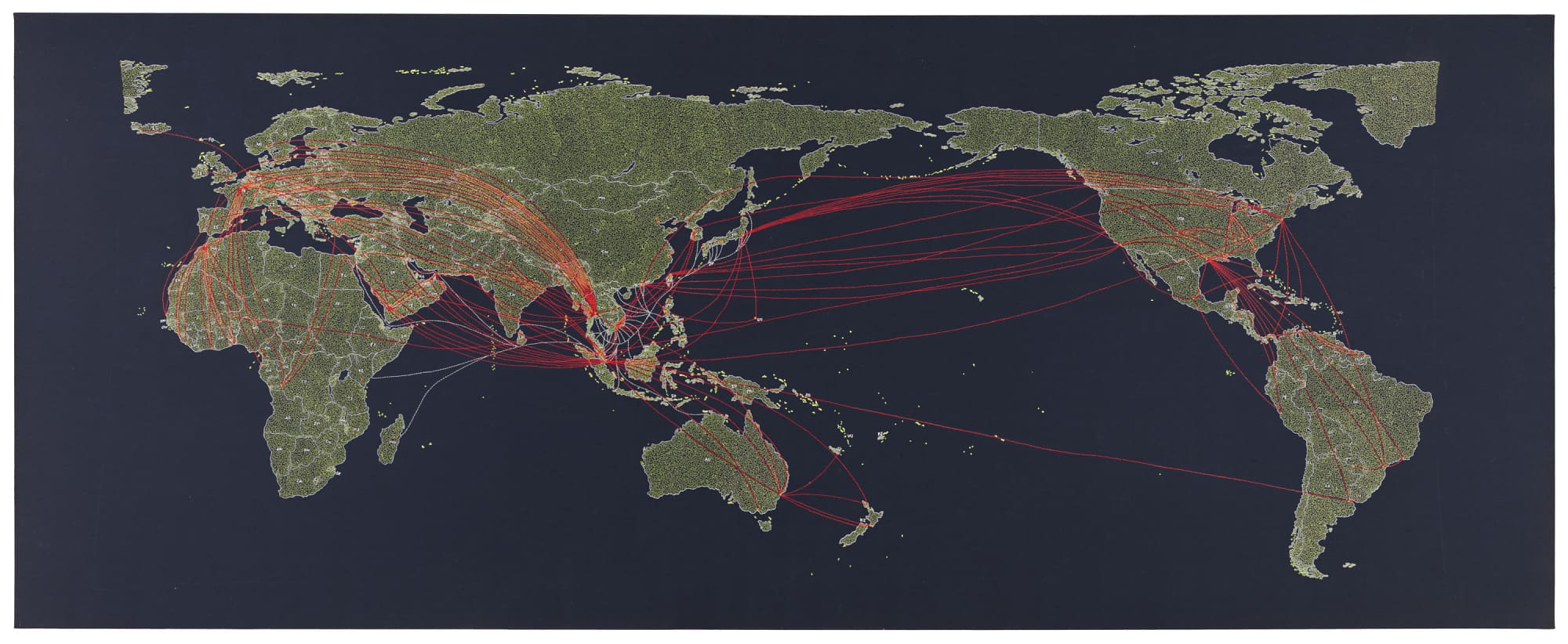
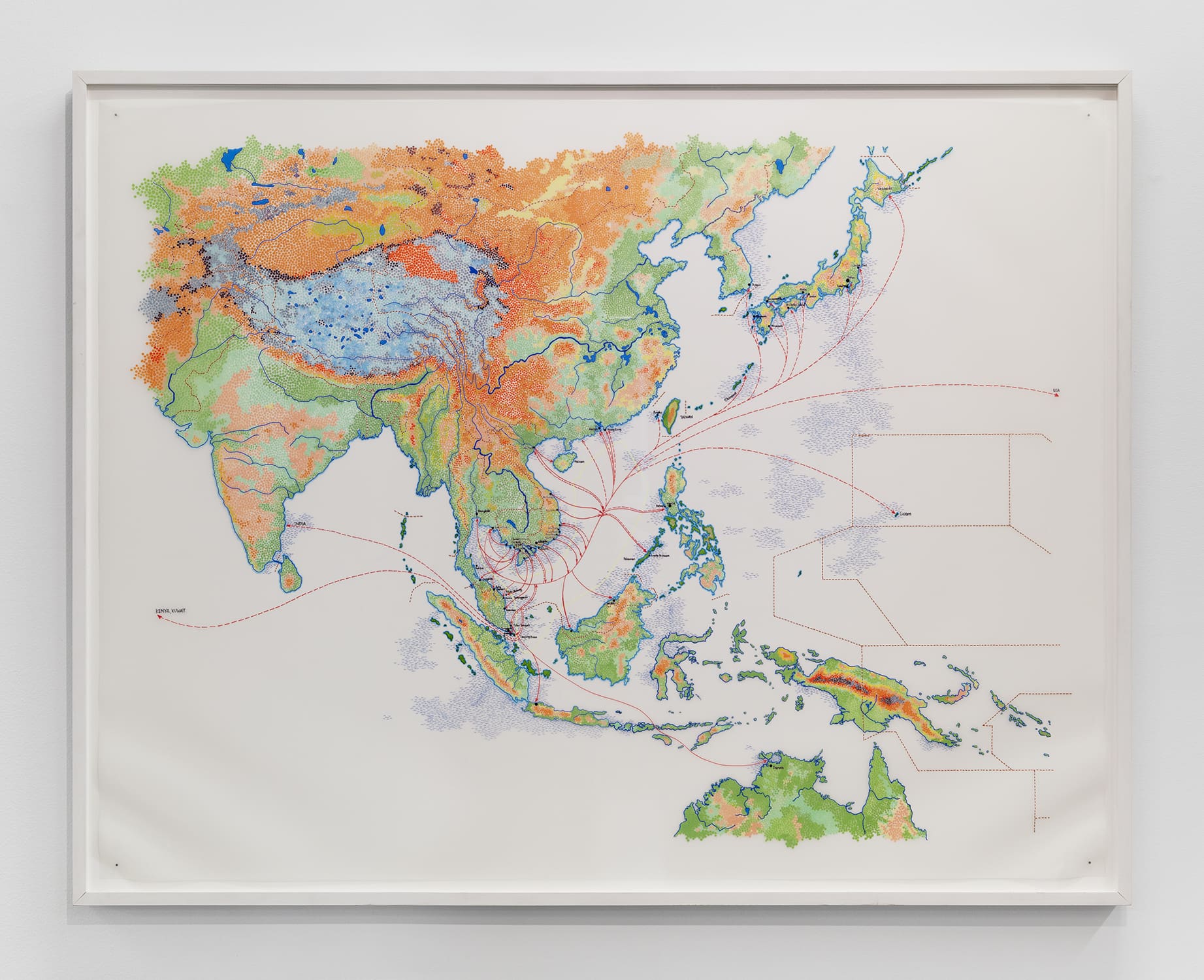
Working across mediums including embroidery, painting, drawing, photography, sculpture, video, and musical composition, much of Chung’s work engages with cartography as she examines the movement of people and goods through time and space. Chung says, “Ordinary citizens go about our daily lives completely unaware that we are being mapped from above. I find it really hard to shake the feeling that somehow a mapmaker can play the role of God in forming a community, a society, a nation-state. So for me to use maps – or the act of remapping – is to subvert power and authority.”
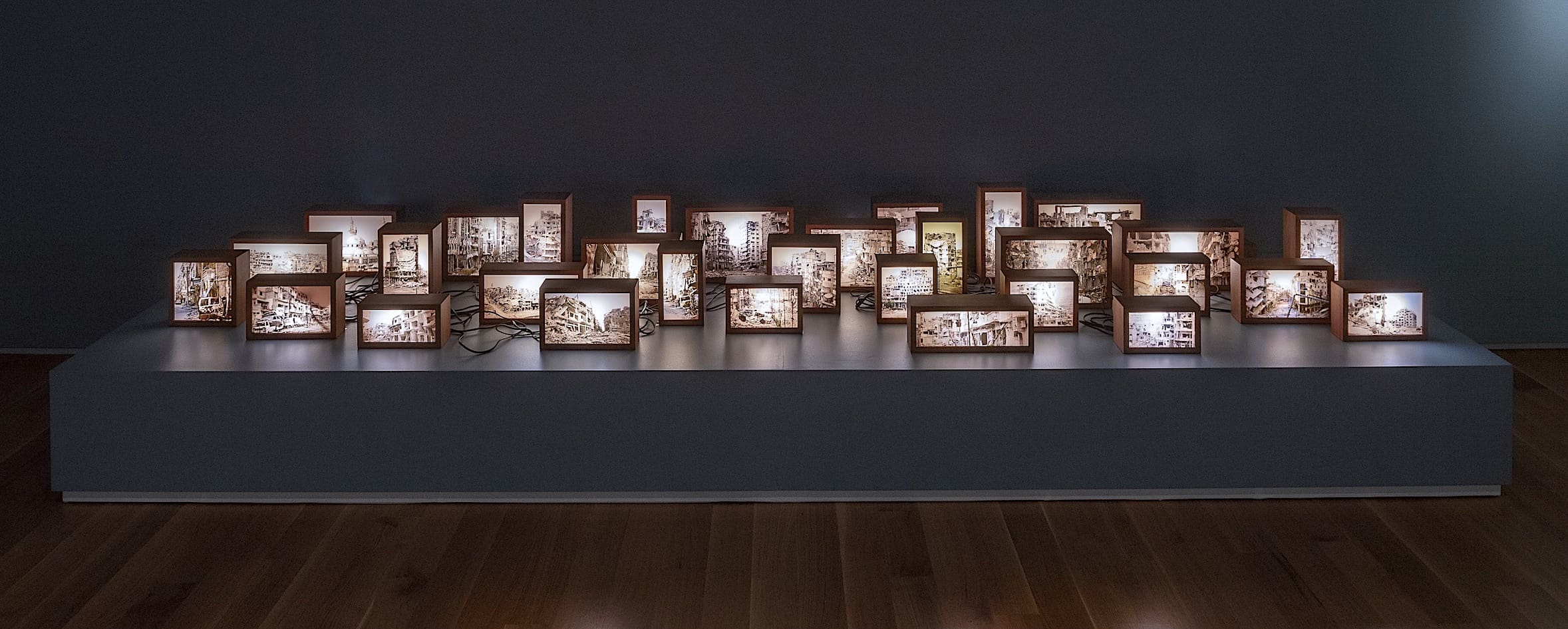
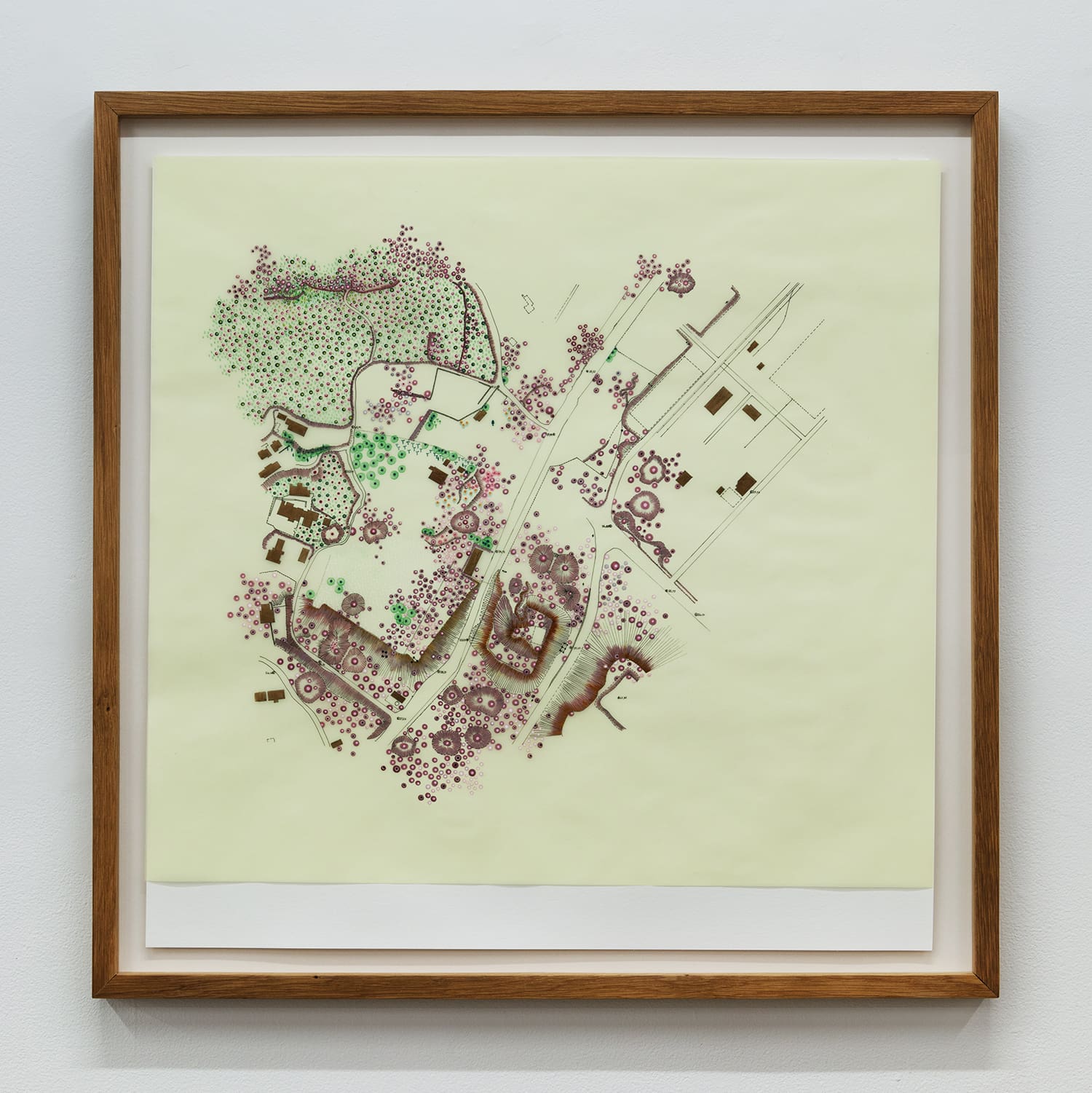
Cultivated through archival and field research into specific locations, ranging in scale from an urban district to an entire continent, these profound cartographic works chart historical and/or projected changes to the physical and human landscape caused by urban planning, environmental disaster, geopolitical partitioning, and humanitarian crisis. Writing about Chung’s work at the 2015 Venice Biennale, art historian Benjamin Buchloh said, “[these] deceptively saccharine-colored, flowery ornaments reveal, on closer inspection, precise cartographic functions…pressing the epistemes of cartography and the diagram into service of the most productive project drawing could currently attempt.”
Chung’s exhibition Rise into the Atmosphere is currently on view at the Dallas Museum of Art and her 1:50 scale model of a floating village is included in the traveling exhibition Breath(e): Toward Climate and Social Justice, part of Getty’s PST ART initiative. The UN Office for Disaster Risk Reduction recently presented Chung’s floating village as an adaptation recommendation alongside the 2024 Asia-Pacific Ministerial Conference on Disaster Risk Reduction. In 2023, her commemorative earthwork, For the Living (part of the exhibition Beyond Granite: Pulling Together), was installed adjacent to the Vietnam Veterans Memorial at the National Mall in Washington, DC. Other major solo shows have included the Smithsonian American Art Museum’s 2019 exhibition Tiffany Chung: Vietnam, Past Is Prologue, which was organized as a response to the museum’s groundbreaking group show, Artists Respond: American Art and the Vietnam War, 1965–1975, taking place at the same time.
Chung is an inaugural 2025 fellow of the KAVAH Fermata Fellowship at the University of Chicago. She was a 2021 RITM Mellon Arts and Practitioner Fellow at Yale University and a recipient of Asia Society’s Art Game Changer Award in 2020 and the Sharjah Biennial Artist Prize in 2013.
Her work has been included in solo and group exhibitions at Getty Museum, CA (2024); Hammer Museum, CA (2024); Kaohsiung Museum of Fine Arts, Taiwan (2024); Moody Center for the Arts at Rice University, TX (2024); Museum of Contemporary Art, Busan, South Korea (2024); Museum Van Loon, the Netherlands (2024); the British Museum, United Kingdom (2023); Buffalo AKG Museum, NY (2023); Dallas Museum of Art, TX (2023); M+, Hong Kong (2023); Schirn Kunsthalle Frankfurt, Germany (2022); Singapore Art Museum, Singapore (2022); Herbert F. Johnson Museum of Art at Cornell University, NY (2021); Smithsonian American Art Museum, DC (2019); Johann Jacobs Museum, Switzerland (2018); Lumiar Cite Maumaus, Portugal (2018); and Hitachi City Museum, Japan (2016); among others.
Her work is held in the collections of AK Wien Kultur, Austria; the British Museum, UK; Faurschou Foundation, Denmark; The Ford Foundation, NY; Fukuoka Asian Art Museum, Japan; Herbert F. Johnson Art Museum, Cornell University, NY; Louisiana Museum of Modern Art, Denmark; M+, Hong Kong; Minneapolis Institute of Art, MN; Orange County Museum of Art, CA; Queensland Art Gallery, Australia; The Royal Melbourne Institute of Technology (RMIT), Vietnam; San Francisco Museum of Modern Art, CA; Sharjah Art Foundation, United Arab Emirates; Singapore Art Museum, Singapore; and Smithsonian American Art Museum, DC; among others.


